
'What the US appears to be doing is to force India to be "the buyer of last resort", on whom their products can be dumped, 1.4 billion people have to eat something, so why not eat American corn?' 'What is exercising the Trump lot is the fact that most of the farms are in solidly Republican Midwestern states: Illinois, Indiana, Kansas, Michigan, Minnesota, Missouri, Nebraska, North Dakota, Ohio, South Dakota, Wisconsin,' points out Rajeev Srinivasan.

Oil ministry this week issued written instructions to the billionaire Mukesh Ambani-run firm to make a 'pro-rata' cut in gas supplies to all existing customers if the production from its KG-D6 field cannot support new customers, two sources with direct knowledge of the information have said.

US strikes on Iran's three main nuclear facilities have once again raised concerns that Tehran might shut down the Strait of Hormuz - one of the world's most critical chokepoints, through which a fifth of global oil and gas supply flows.
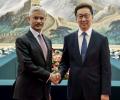
India and China should build on 'good progress' in normalising the bilateral ties to address border-related issues including de-escalation, and it is essential to avoid 'restrictive trade measures and roadblocks', External Affairs Minister S Jaishankar said on Monday during talks with his Chinese counterpart Wang Yi.
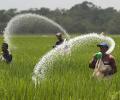
Enthused by rising potato prices after a prolonged slump, Pradeep Sharma was planning to sow the crop on his 15-acre farm near Agra slightly earlier than usual. The delayed departure of the southwest monsoon also prompted his decision, since the good soil moisture would have saved at least one initial irrigation. But the acute shortage of diammonium phosphate (DAP), a crucial nutrient ahead of the sowing season for potatoes, nipped those hopes in the bud. DAP is the second-most used fertiliser in the country after urea.

'You've got to understand it is not easy to die by suicide.' 'People commit suicide only when they lose everything and find no other way to live.'

India needs to be technologically and militarily prepared to defend itself from both Pakistan and China, alerts Ramesh Menon.
As the kharif season is setting in, India is scrambling to source fertilisers from the international market. It is set to sign long-term contracts - especially with Morocco and Latin American countries - to ensure steady flow of supplies. "We have to source fertilisers wherever it is available because crops have to be secured.

Congress general secretary Priyanka Gandhi Vadra on Friday met families of four deceased farmers, who had allegedly faced shortage of fertilisers in Lalitpur, and charged that the fertiliser distribution system of Uttar Pradesh has failed due to collusion among black marketers, officials and leaders.

India and Russia on Tuesday set a target of $100 billion in annual trade volume by 2030 and vowed to develop a robust bilateral payment settlement mechanism using national currencies. The two sides also inked a total of nine agreements to further broadbase cooperation in a range of areas including in the economic domain following summit talks between Prime Minister Narendra Modi and Russian President Vladimir Putin.

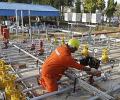
Ongoing strategic investment into assets abroad, alongside gas purchases being made by India, will soon allow the country to access as much gas as it needs, Petroleum and Natural Gas Minister Hardeep Singh Puri said on the sidelines of India Energy Week (IEW 2025).
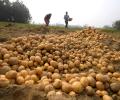
Amid the political blame game over Bengal's potato ban, which led to shortages in Jharkhand and Odisha, Uttar Pradesh farmers are the unlikely winners.
Reliance Industries has resolved almost all issues with fertiliser firms, who are first in line to receive natural gas supplies from the Mukesh Ambani-run company's prolific KG-D6 fields, and is likely to sign gas supply agreements this month.

Authorities in cricket-crazy Bangladesh on Thursday asked fertiliser factories to halt production in a bid to divert gas supply to power plants and ensure an uninterrupted electricity supply ahead of the Twenty20 World Cup.

Finance Minister Nirmala Sitharaman has brought down the budgetary allocation for the fertiliser subsidy for FY21 to Rs 71,309 crore, from the RE of Rs 79,998 crore for FY20, while increasing food subsidy to FCI through "ways and means advance" to Rs 50,000 crore for FY21, from Rs 36,000 crore in RE for FY20, and under the National Food Security Act (NFSA) to Rs 77,982 crore, from Rs 75,000 crore.
While turning his focus to Uttar Pradesh once again after a long gap, Congress general Secretary Rahul Gandhi on Wednesday detected supply of fake fertiliser in a village of Bundelkhand region of Uttar Pradesh.
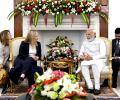
Addressing the media alongside Modi, Meloni said Italy hoped that India, during its G-20 presidency, plays a central role in facilitating and negotiating the process for cessation of hostilities in Ukraine.

Savings for Indian refiners from purchasing Russian oil have decreased to a third of what they were in the years following Russia's invasion of Ukraine, which triggered global crises, sanctions, and discounted Russian oil seeking buyers. Despite this, savings from importing cheap Russian oil were significant enough to help Indian refiners tide over frozen petrol and diesel pump prices.
The prices of natural gas for power and fertiliser units are likely to be raised by 12.5 per cent to Rs 3,600 per thousand cubic metres in July, according to oil secretary M.S.Srinivasan.
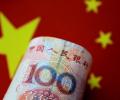
India is not "rethinking" supporting investments from China, said Commerce and Industry Minister Piyush Goyal on Tuesday, referring to a proposal made in the Economic Survey 2024. The survey by India's chief economic advisor last week said India had two "choices" to benefit from the so-called China plus one strategy, either by integrating into that country's supply chain or by promoting foreign direct investment (FDI). "Chief economic advisor's report speaks about new ideas and gives out their own thinking. It is not at all binding on the government and there is no rethinking to support Chinese investments in the country," Goyal told reporters in Delhi.
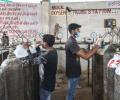
Goyal added the central government did mapping in a meeting with governments of 12 states and union territories most affected by COVID-19 and 6,177 metric tonnes of oxygen will be given to these states.

While conditions have improved over the last decade in western UP, there are still unfulfilled needs.

Increased production of pulses, oilseeds, and cereals will help boost domestic supplies and contribute to keeping inflation low in the coming months.

During the September quarter (Q2FY25), Hindustan Zinc's (HZL's) revenue was reported at Rs 8,300 crore (up 22 per cent year-on-year or Y-o-Y, and 2 per cent quarter-on-quarter or Q-o-Q), marginally above consensus. Operating profit stood at Rs 4,100 crore (up 31 per cent Y-o-Y and 5 per cent Q-o-Q), also a small beat. The operating profit margin was 50 per cent, up from 48.5 per cent in Q1FY25.

In order to reduce government litigations, the Union Finance Minister Nirmala Sitharaman on Saturday said the GST Council has fixed a monetary limit for filing appeals by the tax department before the various appellate authorities. It has recommended a monetary limit of Rs 20 lakh for GST Appellate Tribunal, Rs 1 crore for the High Court and Rs 2 crore for the Supreme Court for filing of appeals by the department before these legal forums, she said after the 53rd GST Council meeting held in New Delhi.

Reliance from 0600 hours today began complying with an oil ministry order asking it to first supply gas produced from eastern offshore KG-D6 fields to priority users -- urea making fertiliser plants, electricity generation houses, LPG extraction units and city gas distribution firms.

Mansukh Mandaviya replaced Anurag Thakur in Prime Minister Narendra Modi's new cabinet.
The Rs 3,200-crore (Rs 32 billion) Hazira LNG Pvt Ltd is expecting to land itself long term gas supply contracts to various domestic fertiliser and power producers, including the Dabhol project, by the end of this year.

The 193-member General Assembly adopted the draft resolution, put forward by Ukraine and its supporters, titled 'Principles of the Charter of the United Nations underlying a comprehensive, just and lasting peace in Ukraine'.

RIL has proposed to charge the government- fixed rate for natural gas on a gross calorific value (GCV) basis, instead of net calorific value (NCV).

To address the supply crunch, CII has suggested leveraging the existing excess capacity in the Indian industry; rolling back import duty hike to look for alternative sources of imports; expanding credit to manufacturing units with quick loan sanctions, and one-time emergency waiver of non-performing asset regulations for three months.

Taking a dig at Pakistan without naming it, Prime Minister Narendra Modi on Friday said a country which was a supplier of aatank (terror) is struggling for aata (flour) these days.

On February 24, when Vladimir Putin announced a military operation on Ukraine, few would have thought that Indian government-owned GAIL India would feel the impact. The tensions over gas supplies were essentially a Europe-Russia problem, related to the sanctions western economies imposed on Moscow. But the EU depends on Russian imports for 40 per cent of its gas stocks, an over-dependence that Russia has underlined with Kremlin-owned Gazprom cutting its supplies through the Nord Stream 1 pipeline to 20 per cent, citing maintenance issues.

'The global situation is not very good.'

Citing the May, 2010, Supreme Court ruling that upheld the government's right to frame gas utilisation policy, the ministry last week wrote to Reliance directing it to first supply natural gas from its KG-D6 fields to priority sectors like fertiliser and power, official sources said.

Trinamool Congress is the second highest recipient of political donations through electoral bonds.

'China is somewhat disappointing in its recovery, and slow growth, and India is reporting strong growth numbers.'

The external affairs minister said the SAARC is in trouble as one of its members has been supporting terrorism.

It is expected to take a similar stand at the Mumbai and Delhi high courts, where Welspun Maxsteel, Ispat Industries and Essar Steel have challenged the petroleum ministry's decision to divert KG-D6s supply from steel and petrochemicals to power and fertiliser.
 © 2026 Rediff.com - Advertise with us - Disclaimer - Privacy Policy - Sitemap - Feedback - About us - Terms of use - Grievances